Best Ergonomic Mice
Quick answer
The Logitech Lift Vertical ($66.50) is the top pick for a 57 degree vertical grip that keeps the forearm from twisting flat, at a price well under the premium end of the category. Budget shoppers get the same vertical angle concept from the Anker 2.4G Ergonomic Mouse ($19.98).
Researched from manufacturer specifications, OSHA workstation guidance, and verified owner reviews. Not independently tested in person.
A standard mouse forces the forearm to rotate so the palm faces flat down, a position called pronation, and holding that rotation for hours is a common complaint among people who spend a full workday on a computer. The Logitech Lift Vertical ($66.50) tilts the grip to roughly 57 degrees so the hand meets the mouse in more of a handshake position, and it lands as the top pick here for combining that angle with a build quality that owner reviews describe as holding up over years of daily use.
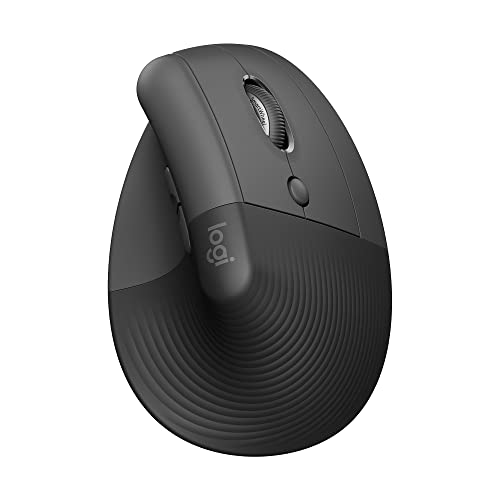
Logitech Lift Vertical Ergonomic Wireless Mouse - Graphite
A documented 57 degree vertical angle reduces forearm rotation compared to a flat mouse, and it comes from a brand with a long track record of driver support and consistent tracking, based on owner reviews.
The three tiers
Anker 2.4G Wireless Ergonomic Mouse, Right Hand Vertical Mouse USB Receiver
The Anker vertical mouse offers the same basic vertical grip concept as pricier options for under $20, which is the lowest cost way to test whether a vertical mouse suits a particular hand and grip style.
The trade off: Build materials and long term durability are reported as noticeably lighter duty in owner reviews compared to the mid and upper tiers, and DPI adjustment is more basic.
- Starter
Anker 2.4G Wireless Ergonomic Mouse, Right Hand Vertical Mouse USB Receiver
$19.98 Check pricePrices change often

Logitech Lift Vertical Ergonomic Wireless Mouse - Graphite
The Logitech Lift adds a more refined vertical angle, quieter clicks, and multi device Bluetooth switching, which owner reviews describe as holding up well over years of daily use.
The trade off: It is sized for smaller to medium hands by Logitech specification, and larger hands may find the body too compact for a full workday grip.
- Buy once
Logitech Lift Vertical Ergonomic Wireless Mouse - Graphite
$66.50 Check pricePrices change often
Logitech MX Master 4 Ergonomic Wireless Mouse with Haptics - Graphite
The Logitech MX Master 4 pairs an ergonomic body shape with haptic feedback and the brand flagship scroll wheel, aimed at power users who spend most of the day in the mouse rather than the keyboard.
The trade off: At $119.99 it costs six times the starter pick, and much of that premium is scroll wheel and software features rather than additional ergonomic benefit over the mid tier.
Who should not buy it: Anyone who mainly wants the vertical grip angle and does not need advanced scroll or gesture features, since the Lift delivers most of the posture benefit for roughly half the price.
- Ceiling
Logitech MX Master 4 Ergonomic Wireless Mouse with Haptics - Graphite
$119.99 Check pricePrices change often

How we chose
We did not test these mice in person. Every claim here comes from the manufacturer specification page, the retail listing, and a read of verified owner reviews, cross checked against OSHA computer workstation guidance describing neutral forearm and wrist position.
We included one trackball style mouse consideration in the research but kept the tiers focused on vertical grip mice, since that is the more common first step people take when a flat mouse causes forearm discomfort. Prices were chosen to span the real range carried in the catalog, from an entry vertical mouse to a full featured flagship.
What does an ergonomic mouse actually change?
A vertical mouse rotates the grip angle so the hand meets the device more like a handshake than a flat press downward. That reduces forearm pronation, the twisting that happens when the palm faces the desk for hours at a time. A trackball mouse takes a different approach entirely, keeping the hand still while a thumb or finger rolls a ball, which removes forearm and shoulder movement from cursor control altogether.
OSHA workstation guidance frames the goal as keeping the forearm, wrist, and hand in as straight and relaxed a line as practical, with elbows near the body at roughly 90 to 120 degrees. Neither a vertical mouse nor a trackball prevents or treats any medical condition; they change grip geometry, and the rest of positioning, mouse pad height relative to the keyboard, and elbow support, still matters.
Vertical mouse versus trackball: which is the better fix?
A vertical mouse is the easier transition for most people because the hand still moves the way it does with a standard mouse, just at a rotated angle. A trackball changes the actual motion, trading arm movement for thumb or finger movement, which some owners describe as a bigger adjustment but ultimately less fatiguing over a full day since the whole arm can rest still.
People with existing shoulder or forearm fatigue from reaching across a large desk sometimes prefer a trackball because the device does not need to be pushed around a mouse pad at all.
| Model | Price | Style | Grip angle | Connection |
|---|---|---|---|---|
| Anker 2.4G Ergonomic | $19.98 | Vertical | Approximate 60 degree | Wireless USB receiver |
| Logitech Lift Vertical | $66.50 | Vertical | 57 degree documented | Bluetooth or receiver |
| Logitech MX Master 4 | $119.99 | Ergonomic contour | Contoured, not vertical | Bluetooth or receiver |
Is a bigger price tag a bigger ergonomic benefit?
Not proportionally. The jump from a $20 vertical mouse to a $66 one buys better build quality, quieter switches, and more reliable multi device pairing, based on owner review patterns, but the grip angle itself is a similar concept across both. The jump from $66 to $119.99 mostly buys scroll wheel refinement, software customization, and haptic feedback rather than a meaningfully different forearm angle.
For someone whose only goal is reducing forearm rotation, the mid tier captures most of the available benefit. The flagship tier makes more sense for someone who already knows they want the extra scroll and gesture features for other reasons.
Do left handed users have ergonomic mouse options?
Vertical mice are commonly designed for a right handed grip, and left handed specific vertical models are less common in mainstream retail catalogs. Trackball mice more often ship in a shape that either hand can use, since the thumb or finger operates the ball rather than gripping an asymmetric body. Anyone who is left handed and set on a vertical mouse should check the product listing specifically for a left handed model rather than assuming a mirrored version exists.
How does mouse choice fit into overall desk setup?
A mouse sits at whatever height the desk surface and any wrist rest create, so a vertical mouse on a desk that is too high still forces shoulder elevation to reach it. OSHA guidance on elbow angle applies to the mouse arm the same way it applies to the keyboard arm. If the desk cannot reach the right height, a keyboard tray that also holds the mouse is the standard fix, since it lowers both input devices together to the same working plane.
Does mouse size matter for hand size?
Manufacturer specifications for vertical mice generally list overall length and width, and owner reviews repeatedly point to hand size mismatch as the most common reason someone returns a vertical mouse. A mouse built for a smaller hand can leave larger hands cramped over the grip surface, forcing fingers to reach for the primary buttons rather than resting naturally on them, which can introduce its own strain even though the vertical angle is correct.
Checking the listed dimensions against a rough hand measurement, palm length and width, before buying is a better predictor of comfort than price tier alone, since the entry level and flagship mice in this lineup are not dramatically different in overall size despite the price gap between them.
Round out the input setup
Shown across the range this category actually spans, from $19.98 to $77.95, rather than the cheapest few.
- Anker
Anker 2.4G Wireless Ergonomic Mouse, Right Hand Vertical Mouse USB Receiver
$19.98 Check pricePrices change often - ProtoArc
ProtoArc EM11 NL Wireless Ergonomic Vertical Mouse, Rechargeable, Black
$25.99 Check pricePrices change often - Nulea
Nulea M501 Wireless Trackball Mouse Ergonomic Thumb Control,4 DPI Levels
$29.69 Check pricePrices change often - Logitech
Logitech 910007026 Ergo M575S Wireless Ergonomic Trackball Mouse - Black
$39.99 Check pricePrices change often - Logitech
Logitech Ergo M575S Wireless Bluetooth Trackball Mouse - Graphite Blue Ball
$49.99 Check pricePrices change often - Logitech
Logitech MX Vertical Wireless Mouse Ergonomic Design - Graphite
$77.95 Check pricePrices change often


Buying tips
- Check the mouse dimensions against your hand size; a vertical mouse sized for a small hand can force an awkward grip for a large hand and vice versa.
- Bluetooth and USB receiver connections both work well, but a receiver uses a USB port that a docking station or laptop may not have to spare.
- A charging cable that plugs into the front of the mouse is worth checking, since some models cannot be used while charging and others can.
Get the desk setup checklist
One page: the measurements to take, the order to set them in, and the numbers to check against. Free, no spam.
The mailing list opens shortly. Every measurement it covers is already on this site, in the calculators and the fit tables, at no cost and with no address required.
Questions people ask
Will a vertical mouse fix my wrist or arm pain?
No mouse prevents, treats, or cures carpal tunnel syndrome, tendinitis, or any other condition. A vertical grip reduces forearm rotation compared to a flat mouse, which published ergonomics guidance identifies as one contributing posture among several. Desk height, chair height, and break frequency all matter as well, and ongoing pain is worth discussing with a medical professional rather than solving through a purchase alone.
How long does it take to get used to a vertical mouse?
Owner reviews commonly describe a few days to about two weeks of reduced precision before accuracy returns to normal, particularly for tasks needing fine cursor control like image editing. Lowering the mouse sensitivity slightly during the first week is a commonly reported way to ease the transition while the hand adjusts to the new angle.
Is a trackball better than a vertical mouse for wrist pain?
Neither is universally better; they address the problem differently. A vertical mouse rotates the grip but still requires arm movement to move the cursor. A trackball removes arm movement entirely, which some owners with shoulder fatigue prefer, while others find the thumb or finger movement of a trackball tiring in its own way. Trying either at the entry price point before committing to a premium model is a reasonable way to find out which suits a given hand.
Do ergonomic mice work for gaming as well as office work?
Vertical and trackball mice are generally built and marketed for productivity work rather than gaming, and the higher click latency and different sensor tuning on many models makes them a poor fit for fast paced games. Someone who both games and works long hours at a desk often keeps a separate standard gaming mouse and switches to a vertical mouse for office tasks.
Do I need a mouse pad with a vertical mouse?
A mouse pad is not required for a vertical mouse to function, since the sensor works the same way as on a standard mouse, but a low friction surface makes the sideways rolling motion of a vertical grip smoother. A firm desk mat or a dedicated mouse pad both work; a soft, uneven surface like a cloth placemat can cause inconsistent tracking.
What is the difference between the Logitech Lift and Logitech MX Vertical?
Both use a similar vertical grip angle from the same manufacturer, but the Lift is the smaller, lighter, and less expensive model aimed at compact hands and everyday office use, while the MX Vertical is a larger, heavier body with more programmable buttons aimed at power users. Hand size and how many extra buttons matter to a given workflow are the practical deciding factors between the two.