Best Surge Protectors for a Desk
Quick answer
The Anker Nano Power Strip ($69.99) is the top pick for a full desk, rated at 1500 joules of surge protection with USB-C charging built in. Anyone who also wants the desk to survive a power outage should look at the APC BX1500M battery backup ($189.99) instead of a plain strip.
Researched from manufacturer specifications and verified owner reviews. Not independently tested in person.
A surge protector is a consumable, not a permanent fixture: the metal oxide varistors inside it absorb energy from every surge event and degrade a little each time, and on most units the glowing light only indicates that power is flowing, not that protection remains. The Anker Nano Power Strip ($69.99) is the top pick here because it is rated at 1500 joules, solidly in the range published guidance recommends for a full desk of electronics, and because Anker documents the rating clearly rather than burying it in marketing language.
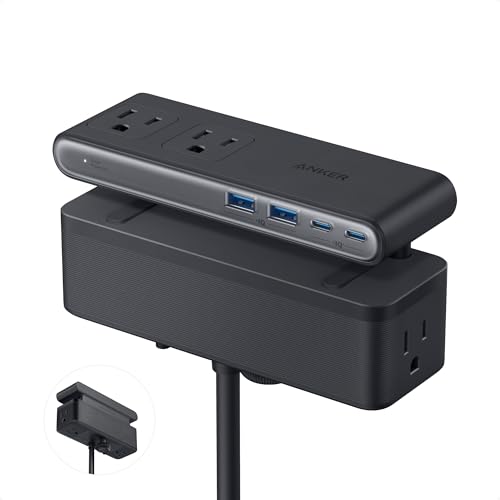
Anker Nano Power Strip, Desk Clamp, 70W Max, 1500J Surge Protector, 2 USB C
A 1500 joule rating covers a fully loaded desk with room to spare, and the clamp mount plus USB-C ports keep both power and charging cables off the desktop.
The three tiers
VILONG Dual Layer Desk Clamp Power Strip, 20W USB-C, 700J Surge Protector
The VILONG dual layer strip documents a 700 joule rating, which published joule bands place at the entry level for basic desk protection, at a price under $35.
The trade off: A 700 joule rating is adequate for one or two devices but leaves less margin if the desk later adds a monitor, a dock, and a lamp all on the same strip.
- Starter
VILONG Dual Layer Desk Clamp Power Strip, 20W USB-C, 700J Surge Protector
$32.99 Check pricePrices change often

Anker Nano Power Strip, Desk Clamp, 70W Max, 1500J Surge Protector, 2 USB C
A 1500 joule rating sits within the 1200 to 2500 joule band published guidance associates with a fully loaded desk, and the desk clamp mount keeps it off the floor.
The trade off: The clamp mount needs a desk edge thin enough to grip, which is worth checking against desk thickness before buying.
- Buy once
Anker Nano Power Strip, Desk Clamp, 70W Max, 1500J Surge Protector, 2 USB C
$69.99 Check pricePrices change often
APC BX1500M UPS Battery Backup & Surge Protector for Computers, Electronics
The APC BX1500M is a battery backup with a high joule surge rating built in, meaning the desk stays powered through a brief outage instead of just being protected from spikes, which a plain power strip cannot do at any price.
The trade off: A battery backup unit is significantly larger and heavier than a power strip, and it needs its own floor or shelf space rather than clamping to the desk edge.
Who should not buy it: Someone who only wants surge protection and has no interest in outage runtime, since a plain high joule strip covers that need for a fraction of the price.
- Ceiling
APC BX1500M UPS Battery Backup & Surge Protector for Computers, Electronics
$189.99 Check pricePrices change often

How we chose
We did not test these units in person or measure joule absorption directly. Every claim here comes from the manufacturer specification sheet, the product listing, and a read of verified owner reviews, cross checked against published joule band guidance for entry, full desk, and high protection use cases.
We favored units that clearly publish a joule rating over ones that only advertise vague language like "surge protection included" without a number, since the rating is the one piece of information that actually differentiates a real surge protector from a basic power strip with no protection at all.
What does a joule rating actually mean?
The joule rating on a surge protector describes the total amount of energy its internal components can absorb from surge events over its lifetime, not per event. Every surge, including small ones from appliances cycling on and off elsewhere in the building, uses up some of that capacity. Published joule bands generally describe 600 to 1200 joules as entry level protection for a single device or two, 1200 to 2500 joules as appropriate for a fully loaded desk, and 2500 to 4000 joules as high protection for a desk with especially sensitive or expensive equipment.
A higher joule rating does not mean the unit lasts forever; it means it can absorb more total surge energy before its protection degrades to nothing.
How do I know when a surge protector needs replacing?
This is the least understood part of surge protector ownership. On most basic power strips, the glowing indicator light only shows that the outlet is receiving power, not that surge protection remains intact, so a strip can look completely normal while offering no protection at all. Only a unit with a dedicated protection status indicator, separate from the power light, actually tells you whether protection is still active. Manufacturers commonly recommend replacing a surge protector after a known major surge event, such as a nearby lightning strike, or on a multi year schedule regardless of visible damage.
| Model | Price | Joule rating | Protection indicator | Outage backup |
|---|---|---|---|---|
| VILONG Dual Layer Strip | $32.99 | 700 joules | Power light only | No |
| Anker Nano Power Strip | $69.99 | 1500 joules | Power light only | No |
| APC BX1500M | $189.99 | High rated, battery backed | Dedicated status display | Yes, battery runtime |
Is a surge protector the same as a power strip?
No, and this distinction matters for safety, not just performance. A power strip only adds outlets; it contains no components to absorb a voltage spike, and plugging sensitive electronics into a plain power strip leaves them exposed to the exact events a surge protector is built for. Every product on this list is a true surge protector with a documented joule rating, not a plain power strip, but it is worth checking that distinction on any other desk accessory advertised only as an "outlet extender" or "power strip."
How much power does a desk setup actually draw?
A 15 amp, 120 volt household branch circuit is rated to carry 1,440 watts continuously once derated to 80 percent of its full 1,800 watt rating, which is the standard safety margin electricians apply to continuous loads. A fully loaded desk with a computer, two monitors, a dock, lighting, and a phone charger rarely exceeds 600 watts total, so the electrical limit that matters in practice is almost never the circuit itself. It is the number of outlets available and the joule rating of the surge protector, since running out of outlets is what pushes people toward daisy chaining power strips, which most manufacturers explicitly warn against.
When does a battery backup make more sense than a plain surge protector?
A plain surge protector, no matter how high its joule rating, does nothing when the power actually goes out; the desk simply loses power along with everything else on the circuit. A battery backup, sized using the standard formula of watts divided by a 0.6 power factor to get the required VA rating, keeps a computer running long enough to save work and shut down cleanly during a brief outage. Anyone who has lost unsaved work to a power blip, or who runs equipment that should not lose power abruptly, gets a real functional benefit from a battery backup that a surge protector alone cannot provide.
Keep the desk powered and organized
Shown across the range this category actually spans, from $13.99 to $294.99, rather than the cheapest few.
- LOVJOYSE
Cable Management, 25.3'' Under Desk Cable Management Tray No Drill
$23.99 Check pricePrices change often - Univivi
Univivi Under Desk Cable Management Tray, Cable Management, 32 inch, Black
$38.69 Check pricePrices change often - TRIPP LITE
Eaton Tripp Lite SMART1500LCD 1500VA 2U Rack Mount UPS 900W Battery Backup
$294.99 Check pricePrices change often



Buying tips
- Look for a documented joule rating in the specifications, not just the words "surge protector" in the title.
- Never plug one power strip or surge protector into another; this is called daisy chaining and most manufacturers warn against it directly.
- A surge protector is not an extension cord substitute for permanent wiring; both surge protectors and extension cords are meant for temporary or appliance level use, not as a stand in for an additional outlet.
Get the desk setup checklist
One page: the measurements to take, the order to set them in, and the numbers to check against. Free, no spam.
The mailing list opens shortly. Every measurement it covers is already on this site, in the calculators and the fit tables, at no cost and with no address required.
Questions people ask
What joule rating do I need for a home office desk?
Published joule bands put a fully loaded desk, meaning a computer, monitors, a dock, and lighting all on one strip, in the 1200 to 2500 joule range. A desk with just a laptop charger and a lamp can get by with an entry level 600 to 1200 joule unit. A desk with especially expensive or sensitive equipment, or in an area with frequent power fluctuations, benefits from a high protection unit in the 2500 to 4000 joule range.
How often should I replace a surge protector?
There is no single fixed timeline, since replacement depends on how many surge events the unit has absorbed, but manufacturers commonly suggest replacing a unit after any known major surge, such as a nearby lightning strike, and as a general precaution every few years even without an obvious event. A unit with a dedicated protection status indicator, rather than just a power light, is the only reliable way to know if protection has already been used up.
Can I plug a surge protector into another surge protector?
No. This is called daisy chaining, and most manufacturers explicitly warn against it in their instructions because it can push the combined load past what the internal wiring and breaker of the first unit are rated to handle safely. If more outlets are needed, the correct fix is a single surge protector with more outlets, or a second one plugged directly into a wall outlet rather than into the first strip.
Do I need a battery backup or is a surge protector enough?
A surge protector only protects against voltage spikes; it does nothing during an actual power outage. A battery backup, sized using watts divided by a 0.6 power factor for the required VA rating, keeps equipment running briefly during an outage so work can be saved and a computer shut down cleanly. Someone who has never lost work to a power outage may find a plain surge protector sufficient, while someone running always on equipment benefits more from a battery backup.
Does a higher joule rating mean the surge protector is safer?
A higher joule rating means the unit can absorb more total surge energy over its lifetime before its protection degrades, which is a real safety benefit for a desk with more connected devices. It does not change basic electrical safety practices like avoiding daisy chaining or checking that the total connected load stays within the rated capacity of the circuit, both of which apply regardless of joule rating.
Why does the power light stay on even after a surge protector stops protecting?
On most basic units, the glowing light is wired to indicate that electricity is flowing through the outlets, not that the internal surge protection components are still functional. Since the metal oxide varistors that absorb surges degrade with each event without any visible change, a unit can pass power normally while offering no meaningful protection. Only a surge protector with a separate, dedicated protection status indicator actually communicates whether protection remains.