Home Office Acoustics
Quick answer
Acoustic panels absorb sound reflecting around inside a room, reducing echo and improving how a microphone or your own ears perceive that room, but they do not block sound from transmitting between rooms, which is a mass problem instead. If the actual complaint is a neighbor, a housemate or a barking dog audible through a wall or door, panels on the wall will not fix it; adding mass or sealing air gaps at the door is what actually reduces transmission.
The absorption-versus-transmission distinction is established acoustic physics; the specific product recommendations for sealing and mass are practical conventions for a home office rather than a formal published standard.
Acoustic treatment is one of the most commonly misapplied purchases in a home office, because the products marketed for "soundproofing" mostly solve a different problem than the one people are trying to fix. Foam panels reduce echo inside a room; they do not stop sound from passing through a wall or door into the next room. Understanding that distinction, absorption versus transmission, before buying anything is the single most useful thing this guide can tell you.
What is the difference between absorbing sound and blocking it?
Acoustic panels ABSORB reflections, meaning they reduce sound waves bouncing off hard surfaces within a room, which shortens reverberation and reduces the "echoey" quality a room can have on a video call or recording. They do NOT block transmission between rooms, which is a separate physical phenomenon governed by how much mass and how few air gaps exist in the wall, door or floor separating two spaces.
This is the most useful distinction this guide can offer: if your problem is your own voice sounding harsh or echoing back to you on calls, that is an absorption problem and panels are the right tool. If your problem is hearing sound from another room, or being heard in another room, that is a transmission problem and panels on your own walls will do very little about it.
Panels and bass traps for absorption
Shown across the range this category actually spans, from $34.99 to $249.99, rather than the cheapest few.
- SD SODOCT
24 Pack 2" Thick Pyramid Acoustic Foam, Sound Proof Foam Panels for Walls
$34.99 Check pricePrices change often - ZAPPUP
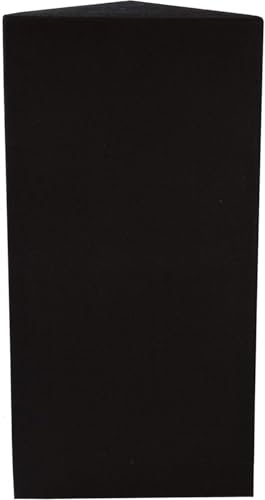
Triangular Corner Bass Traps Acoustic Foam 4 Pack for Studio Home Theater
$35.99 Check pricePrices change often - FOROOMACO
Foroomaco Triangular Pyramid Bass Traps for Ceiling Corners, 4 Pack, Black
$49.99 Check pricePrices change often - ATS Acoustics
ATS Acoustics Corner Bass Trap, Low Frequency Range, NRC 1.40, 24" x 48" x 13" (Black)
$249.99 Check pricePrices change often


How do I know which problem I actually have?
Clap once in the room and listen. A sharp echo or a "boxy" ringing sound after the clap indicates reflections bouncing around a room with too many hard, parallel surfaces, which is the absorption problem panels address. If instead your issue is being able to clearly hear a television, conversation or traffic noise from another room, or being told you can be heard through a closed door during calls, that is a transmission issue that panels will not resolve regardless of how many you install.
Many home offices actually have both problems at once, an echoey room that also leaks sound to the rest of the house, and it is worth treating them as two separate purchases rather than expecting one product category to solve both.
| Symptom | Likely problem | Fix category |
|---|---|---|
| Clap produces a sharp echo or ring | Absorption, reflections inside the room | Panels, bass traps |
| Voice sounds harsh on your own calls | Absorption at first reflection points | Panels near desk and mic |
| Sound heard through a wall or door | Transmission between rooms | Mass, door seal |
| You are heard outside a closed door | Transmission, air gap under the door | Door draft stopper, solid door |
Door seals for transmission
Shown across the range this category actually spans, from $15.86 to $16.99, rather than the cheapest few.
- Everlasting Comfort
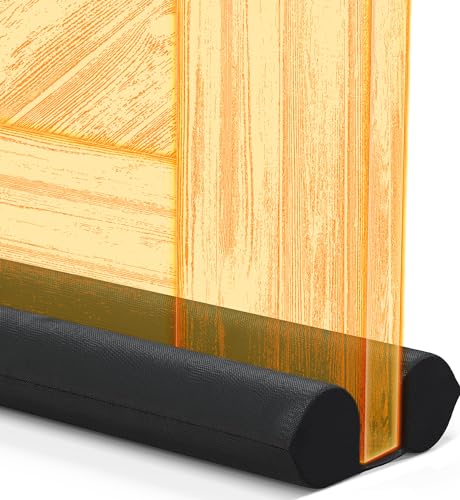
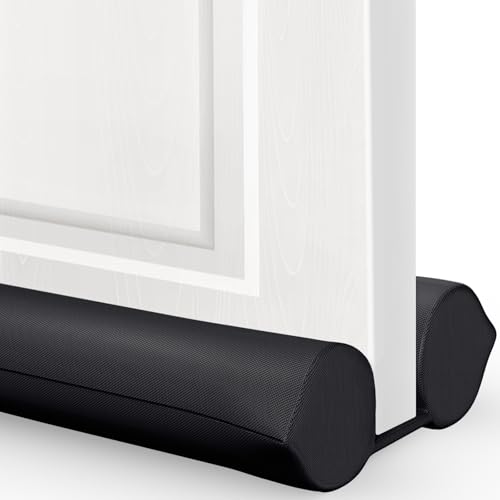
Everlasting Comfort Under Door Draft Stopper for Bottom of Doors, 1 Pack
$15.86 Check pricePrices change often

What actually reduces sound transmission between rooms?
Since transmission is a mass problem, the interventions that help are ones that add mass or remove air gaps rather than ones that absorb reflections. A solid-core door blocks more sound than a hollow-core door simply because it has more mass to vibrate through. Sealing the gap at the bottom of a door with a draft stopper closes one of the most common paths for sound (and air) to pass essentially unobstructed under a door that otherwise looks well sealed.
Heavier curtains, added mass in a wall, or a solid door are all addressing the same underlying physics: sound has to move mass to pass through a barrier, and more mass with fewer gaps means less sound gets through. None of these are absorption products, and none of them are what a typical foam panel kit is designed to do.
Microphones for calls
Shown across the range this category actually spans, from $29.99 to $69.99, rather than the cheapest few.
- TONOR
TONOR Conference Microphone for PC, USB Microphone for Win & Mac, G11
$29.99 Check pricePrices change often - OTYHVV
Wireless Headset with Mic for Work Bluetooth Headset with Microphone for PC
$53.99 Check pricePrices change often - Angteela
Upgrade ANC & ENC Wireless Headset with Mic for Work(Flip-to-Mute & Dongle)
$69.99 Check pricePrices change often


What do acoustic panels and bass traps actually do inside the room?
Flat acoustic panels, typically foam or fabric-wrapped, absorb mid and high frequency reflections off walls, reducing the general echo and making speech sound clearer to a microphone or to your own ears during a call. Bass traps target low frequency buildup specifically in room corners, where bass frequencies tend to accumulate regardless of how many flat panels are on the main walls, and are a separate purchase from flat panels rather than a more expensive version of the same thing.
Coverage matters more than panel thickness for typical home office needs: covering roughly the first reflection points on the wall (where a mirror held up to the wall would show your microphone or speakers) delivers most of the benefit before adding panels everywhere becomes worthwhile.
| Product | Solves | Does not solve |
|---|---|---|
| Foam or fabric acoustic panel | Mid/high frequency echo inside the room | Sound transmission through walls or doors |
| Corner bass trap | Low frequency buildup in corners | General mid/high echo, or transmission |
| Door draft stopper | Sound and air leaking under a door | Echo inside the room itself |
Do acoustic panels help a webcam microphone specifically?
Yes, for the absorption problem. A microphone picks up reflected sound just as your ears do, and a room with excessive reflections will sound noticeably worse to call participants than the same room with basic panel treatment at the first reflection points around a desk and microphone position. This is a reasonable and relatively inexpensive fix for the "why do I sound like I am in a box on calls" complaint, and it is worth trying before assuming a more expensive microphone is the answer.
It will not, however, reduce how much of a dog barking in the next room, or a washing machine running down the hall, comes through into the call, since that is transmission through the walls and door rather than reflection within the office itself.
What is a reasonable order to address home office acoustics?
First, diagnose which problem you have using the clap test above, since the fix is different for each. For an echoey room, add panels at the first reflection points and a bass trap in a corner if low frequency buildup is noticeable. For a transmission problem, start with the door: a draft stopper at the bottom seals one of the cheapest and most overlooked leak paths, and a solid-core door replacement is the next step up if the hollow-core door itself is the bulk of the leak. Wall-level soundproofing beyond that point becomes a larger construction project outside the scope of desk and office accessories covered here.
Questions people ask
If I cover my whole office in acoustic foam, will my family stop hearing me on calls?
Probably not by much. Foam panels absorb reflections inside your own room; they do very little to block sound from transmitting through the wall or door to the rest of the house, since transmission is a mass problem rather than an absorption problem. If being heard through the door is the actual complaint, a solid-core door and sealing the gap underneath will do more than adding panels.
Do thicker acoustic panels block more sound transmission?
Thicker panels absorb a slightly broader range of frequencies inside the room, particularly lower-mid frequencies that thin panels miss, but thickness in the 1 to 2 inch range typical of foam panels does not meaningfully add the mass needed to block transmission through a wall. Transmission blocking requires substantially more mass than a foam panel provides, regardless of thickness.
Why does my office sound echoey even with carpet on the floor?
Carpet absorbs some reflections off the floor, but hard parallel walls, a hard ceiling, and any bare windows or large flat surfaces can still produce significant reflection and echo on their own. The clap test described above will reveal whether echo is still present despite the carpet, and if so, wall or ceiling panels are addressing a surface the carpet does not reach.
Does a heavier curtain over my window help with echo or transmission?
It can help modestly with both, but for different reasons. A heavier curtain absorbs some reflection off the window glass, contributing a little to the echo problem, and its added mass can also reduce a small amount of sound transmission through the window itself compared to a bare pane, though it is a smaller effect than a solid door or wall treatment for a dedicated transmission problem.
Is a corner bass trap necessary for a typical home office?
Not always. Bass trap benefit is most noticeable in rooms with a noticeable low frequency rumble or boominess, often from HVAC, nearby traffic, or room dimensions that reinforce certain low frequencies. If the clap test and general listening do not reveal a specific low frequency problem, flat panels at the first reflection points alone are often sufficient for typical call and recording clarity.
What is the cheapest fix for sound leaking under my office door?
A door draft stopper, sometimes called a door sweep or bottom seal, is one of the least expensive and most effective single fixes for sound (and air) leaking under a closed door, since that gap is often the single largest unobstructed opening in an otherwise reasonably sealed room. It addresses transmission, not the room's internal echo, so pair it with panels only if echo is also a separate issue.