Office chairs rated 500 lb
Quick answer
A 500 lb rating means the chair was tested to a standard whose load requirements correspond to that figure, normally ANSI/BIFMA X5.11. Ratings in this class are generally associated with the large occupant standard, which tests to different requirements than the general purpose one. The rating is a structural test result, not a comfort promise.
Load ratings and the test standards behind them are published. ANSI/BIFMA X5.11, Large Occupant Office Chairs, Tests is the relevant document for this class.
| Aspect | Covered by the rating | Notes |
|---|---|---|
| Static load on the seat | Yes | The headline test |
| Repeated seat impact | Yes | Drop and cycle testing |
| Backrest strength | Yes | Tested separately from the seat |
| Stability against tipping | Yes | Base and castor geometry |
| Seat width and depth for a larger user | No | A dimension question, not a strength one |
| Cushion durability over years | Partly | Cycle tested, but foam density is not in the rating |
| Comfort | No | Not what the standard measures |
| Standard | Scope | What it means for a buyer |
|---|---|---|
| ANSI/BIFMA X5.1 | General purpose office chairs | The usual certification. Covers static load, drop, durability and stability. |
| ANSI/BIFMA X5.11 | Large occupant office chairs | A separate standard with its own requirements. A chair tested only to X5.1 has not met it. |
| No named standard | Unverified | A capacity figure with no test reference behind it is a marketing number. |
Chairs in this class, across the price range
Shown across the range this category actually spans, from $129.99 to $1585.00, rather than the cheapest few.
- Steelcase
Steelcase Leap Chair Black Base - Hard Floor Casters - Black Fabric V2
$589.00 Check pricePrices change often - Haworth
Haworth Fern Ergonomic Office Chair w/Breathable Mesh, Lumbar, Coal
$1,130.00 Check pricePrices change often - Haworth
Haworth Fern Ergonomic Office Chair, Digital Knit, Lumbar, Charcoal Black
$1,266.00 Check pricePrices change often - Haworth
Haworth Fern Ergonomic Office Chair, Digital Knit, Lumbar, Ember
$1,585.00 Check pricePrices change often


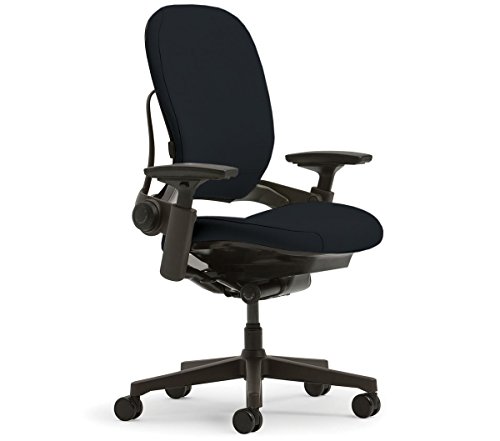
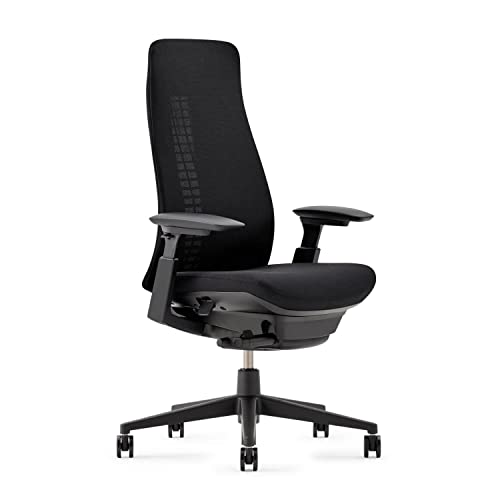


The number is a structural test, not a fit statement
A 500 lb rating tells you the chair survived a defined series of load, impact and stability tests. It does not tell you the seat is wide enough, that the pan is deep enough, or that the cushion will stay supportive. Those are dimensional and material questions, and they are what actually decide whether a larger user finds a chair comfortable over a full day.
So read the rating alongside the seat width, the pan depth and the cylinder class. A chair rated 500 lb on a 19 in wide seat is a different proposition from the same rating on a 22 in seat, and the width is the specification more likely to be the limiting factor in practice.
Which standard sits behind the claim
ANSI/BIFMA X5.1 and ANSI/BIFMA X5.11 are different documents with different requirements. A rating of 500 lb generally implies the large occupant standard, which is the one to look for in this class. A listing that says "BIFMA certified" without naming the test is telling you very little, because it does not say which requirements were met.
Also worth knowing: the gas cylinder carries its own rating, and it is a replaceable part. A chair can be structurally sound while its cylinder is the weak point, and a cylinder that sinks under load is the commonest failure in the whole category. Replacing one is inexpensive, which is worth remembering before writing off an otherwise good chair.
Questions people ask
What does a 500 lb office chair rating mean?
It means the chair passed the load, impact, durability and stability tests of a published standard at that figure, normally ANSI/BIFMA X5.11. It is a structural result. It says nothing about seat width, pan depth, cushion quality or comfort, all of which matter just as much for a larger user.
Is BIFMA X5.1 the same as X5.11?
No, and the difference matters. X5.1 covers general purpose office chairs, while X5.11 is a separate standard for large occupant seating with its own requirements. A chair certified to X5.1 has not been tested to X5.11, so a listing that just says BIFMA certified without naming the number is not telling you which one it met.
What else should I check besides the weight rating?
Seat width first, since it is more often the limiting factor than strength. Then pan depth, the cylinder class and its own rating, the base material, and whether the castors suit your floor. A chair can be rated well above your weight and still be too narrow to sit in comfortably for a full day.
Why do office chairs sink over time?
Almost always the gas cylinder rather than the chair. The seal inside fails and the cylinder no longer holds pressure, so the seat descends slowly under load. It is a replaceable commodity part and a cheap fix, which is worth trying before replacing a chair that is otherwise in good condition.