Best Office Chairs Under $300
Quick answer
The ELABEST Ergonomic Mesh Office Chair ($239.99) is BIFMA X5.1 tested and is the only chair under $300 in this lineup with a published test citation behind it. If four-way lumbar adjustment matters more to you than certification, the SIHOO B300 Pro ($259.99) is the most adjustable chair this budget buys.
BIFMA X5.1 citations are published test standards; seat height, depth and lumbar height ratios discussed here are rule-of-thumb conventions rather than a single mandated number.
Under $300 is where office chairs stop compromising on the basics: independent lumbar height, a seat pan that slides, and armrests that move in more than one direction. The ELABEST Ergonomic Mesh Office Chair ($239.99) is the strongest value in this budget because it is tested to ANSI/BIFMA X5.1, a published commercial standard most chairs under $300 do not cite at all. If you want the single most adjustable chair this budget buys regardless of certification, the SIHOO B300 Pro ($259.99) adds four-way lumbar adjustment that flexes with your spine instead of staying in one fixed spot.
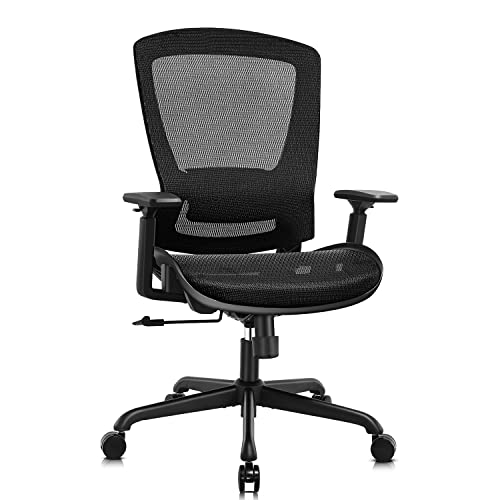
ELABEST Ergonomic Mesh Office Chair,Comfy Computer Desk Chair - BIFMA 5.1 Certified Commercial Swivel Task Chair for Home Office - Adjustable Lumbar Support & Armrests,Tilt Function,Wide Seat (Black)
BIFMA X5.1 is a published test standard, not a marketing claim, and this is the only chair under $300 in this catalog tested to it. Seat depth and lumbar height both adjust independently of seat height.
The three tiers
ErgoSift Ergonomic Office Chair with Adjustable Seat Depth, 4D Armrests
A sliding seat pan and 4D armrests for under $100 covers more independent adjustment than most sub-$150 chairs offer.
The trade off: Lumbar support is fixed in place rather than height-adjustable, so it will not fit every torso length equally well.
- Starter
ErgoSift Ergonomic Office Chair with Adjustable Seat Depth, 4D Armrests
$99.99 Check pricePrices change often

SIHOO B100 PRO Ergonomic Mesh Office Chair with Footrest
SIHOO's adaptive lumbar system plus a built-in footrest, useful if your current desk and chair combination leaves your feet unsupported.
The trade off: The footrest is fixed to the chair's frame, so it is redundant, or in the way, if you already use a separate footrest.
- Buy once
SIHOO B100 PRO Ergonomic Mesh Office Chair with Footrest
$229.99 Check pricePrices change often
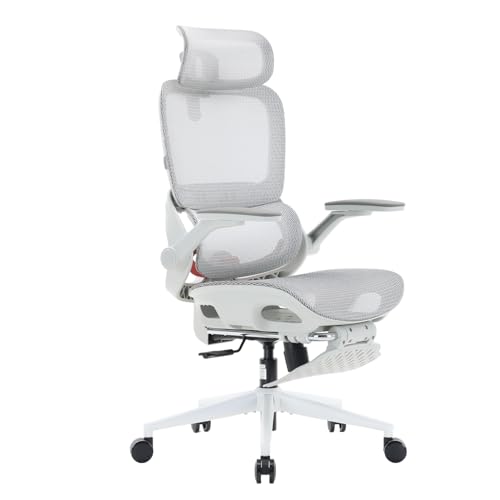
SIHOO B300 Pro Ergonomic Office Chair Without Footrest, 4D Lumbar Support
Four-way lumbar support, height, depth, width and firmness, is the most adjustment this budget buys anywhere in the catalog.
The trade off: At $259.99 it sits close enough to $300 that it is worth comparing against the premium tier's $589 entry price before deciding this is your ceiling.
Who should not buy it: Buyers who want a footrest included; the Buy once pick above covers that instead.
- Ceiling
SIHOO B300 Pro Ergonomic Office Chair Without Footrest, 4D Lumbar Support
$259.99 Check pricePrices change often

How we chose
We did not sit in these chairs ourselves. Each pick is drawn from the manufacturer's published specifications, seat depth range, lumbar adjustment type, and BIFMA citation where one exists, cross checked against a large sample of verified owner reviews for recurring complaints about durability or sizing.
Every chair on this page had to stay under $300 at the time the catalog was compiled and offer at least one independent adjustment point beyond height and recline, since a chair that only reclines is not meaningfully different from a $100 task chair regardless of price.
What do you actually give up under $300 compared to a premium chair?
The biggest difference is warranty length and long-term component durability, not day-one comfort. Premium chairs starting around $589 typically carry 10 to 12 year warranties, while the chairs on this page run 1 to 5 years.
You also generally give up a published X5.11 large occupant rating; none of the chairs here cite that standard, so if you need a verified high weight capacity, check the big and tall roundup instead of this one.
Is 4D lumbar support worth the extra cost over a fixed lumbar pad?
4D lumbar support means the pad moves in four directions, up and down, in and out, side to side pivot, and firmness, rather than sitting in one fixed spot. For anyone whose torso length falls outside average, that adjustability is the difference between the lumbar pad landing on your lower back or missing it entirely.
A fixed lumbar pad is not automatically wrong, it just assumes an average torso length. If you have used a chair before and know the lumbar always felt like it was in the wrong place, the extra $20 to $30 for adjustable lumbar is worth it.
How much does seat depth adjustment matter at this price?
Seat depth controls how much of your thigh is supported before the front edge of the seat hits the back of your knee. Too deep, and it presses into the knee; too shallow, and the thigh gets no support at all.
Every chair on this page adjusts seat depth in some form, which was a requirement for inclusion. The table below shows how the adjustment type differs by tier.
| Chair | Price | Lumbar | Seat depth | Armrests |
|---|---|---|---|---|
| ErgoSift Ergonomic (Starter) | $99.99 | Fixed pad | Slider | 4D |
| SIHOO B100 Pro with Footrest (Buy once) | $229.99 | Adaptive, recline-linked | Slider | 3D plus footrest |
| ELABEST Mesh, BIFMA 5.1 (Top pick) | $239.99 | Height-adjustable | Slider | Adjustable, tilt function |
| SIHOO B300 Pro (Ceiling) | $259.99 | 4D: height, depth, width, firmness | Slider | 4D |
Mesh or PU leather under $300, which holds up better?
Mesh backs breathe better and resist the seat-shaped compression dent that PU leather and foam padding develop after a couple of years of daily use.
PU leather looks more finished out of the box and wipes clean easily, but it cracks and peels faster under daily friction, especially in a warm room. Under $300, mesh is generally the safer long-term choice for a primary work chair.
When does it make sense to skip this tier and go straight to premium?
If you already know you sit more than eight hours a day, five days a week, the jump from a 2 to 5 year warranty at $259.99 to a 10 to 12 year warranty starting around $589 pays for itself faster than it looks on paper.
If your daily desk time is closer to four hours, or you split time between a home office and another workspace, the chairs on this page are not a compromise, they are the more sensible spend.
More chairs under $300
Shown across the range this category actually spans, from $99.99 to $349.99, rather than the cheapest few.
- ErgoSift
ErgoSift M1 Ergonomic Office Chair with 3.1-Inch Adjustable Seat Depth
$99.99 Check pricePrices change often - HUANUO
HUANUO Ergonomic Office Chair with 6D Armrests and Adjustable Seat Depth
$134.99 Check pricePrices change often - SIHOO
SIHOO B100 Mesh Ergonomic Office Chair with Adaptive Lumbar Support
$219.99 Check pricePrices change often


Buying tips
- Confirm seat depth adjustment range against your thigh length before buying; a chair without it will never fit as well no matter how good the lumbar is.
- If you already own a footrest, skip listings that bundle one in, since a fixed built-in footrest cannot be removed if it does not fit your desk height.
- Look for a specific BIFMA citation on the listing itself, not just the word 'ergonomic' in the title.
- Mesh backs are the safer long-term pick under $300 if the chair will see daily eight-hour use.
Get the desk setup checklist
One page: the measurements to take, the order to set them in, and the numbers to check against. Free, no spam.
The mailing list opens shortly. Every measurement it covers is already on this site, in the calculators and the fit tables, at no cost and with no address required.
Questions people ask
What is the best office chair under $300?
The ELABEST Ergonomic Mesh Office Chair at $239.99 is the strongest overall pick because it is tested to ANSI/BIFMA X5.1, a published commercial standard, while still adjusting seat depth and lumbar height independently. The SIHOO B300 Pro at $259.99 offers more total lumbar adjustment, four directions instead of one, if that matters more to you than a published certification.
Is $300 enough to buy a genuinely ergonomic chair?
Yes, for the core adjustments that matter most: seat depth, lumbar height and multi-directional armrests. What $300 does not buy is the decade-plus warranty and large occupant certification that premium chairs starting around $589 offer. For four to eight hours of daily use, a well-chosen sub-$300 chair covers the fit fundamentals.
Should I buy a chair with a built-in footrest?
Only if your desk setup does not already include one and your feet do not rest flat on the floor when the seat is at the correct height. A built-in footrest, like the one on the SIHOO B100 Pro in this roundup, is fixed to the chair frame, so it cannot be repositioned independently the way a standalone footrest can.
What is the difference between BIFMA X5.1 and X5.11?
ANSI/BIFMA X5.1 is the general purpose office chair durability and stability test. ANSI/BIFMA X5.11 is a separate standard specifically for large occupant chairs. A chair tested to X5.1, like the ELABEST pick here, has not automatically met X5.11, so it should not be assumed to carry a verified high weight rating just because it cites X5.1.
Do chairs under $300 need the seat depth adjusted differently than expensive chairs?
No, the underlying fit principle is the same regardless of price: the seat pan should support most of the thigh without pressing into the back of the knee. What differs by price is how the adjustment is made, a simple slider under $300 versus a synchronized mechanism on premium chairs, not the target measurement itself.
How long should a sub-$300 office chair last with daily use?
Most chairs in this price range are warrantied for 1 to 5 years, and the gas cylinder or foam padding is typically the first component to show wear under eight-hour daily use, often in that same window. Treat the warranty length as a reasonable estimate of expected service life, not a guarantee, and inspect the cylinder if the seat starts sinking unassisted.