Mesh vs Foam Office Chair
Quick answer
Neither mesh nor foam office chairs are inherently better; mesh breathes and holds its shape through frame tension, while foam holds a shape through cushion density that changes how it ages. The seat pan depth and lumbar apex height matter far more than the material, since a chair that does not fit your height will feel wrong regardless of what the seat is made from.
Researched from published ANSI/BIFMA X5.1 test references, manufacturer specifications, and verified owner reviews rather than in-person testing.
The options
- Mesh office chair
The SIHOO M18 Ergonomic Office Chair, a high back mesh chair with adjustable lumbar support, at $139.99.
$139.99 Check priceRated 330 lb by the manufacturer Prices change often - Foam-padded office chair
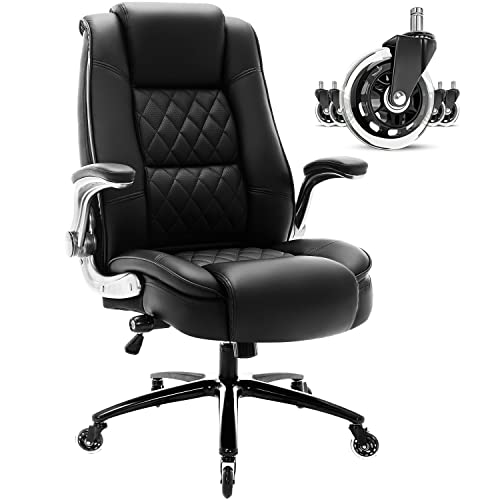
The COLAMY High Back Executive Office Chair, a padded leather and foam chair with ergonomic lumbar support, at $158.78.
$158.78 Check pricePrices change often


Best for: Buyers who run warm, want a breathable seat, and prefer a taut structured feel.
Avoid if: You dislike the open weave texture or want a softer, more plush seat surface.
Best for: Buyers who prefer a plush, cushioned seat and a more traditional executive look.
Avoid if: You get warm easily sitting for long periods, since foam and leather trap heat more than mesh.
| Specification | Mesh chair | Foam-padded chair |
|---|---|---|
| Breathability | High, open weave allows airflow | Lower, foam and upholstery trap heat |
| Shape retention mechanism | Frame tension across the weave | Cushion density |
| Long-term wear pattern | Weave can stretch or sag at high-use points | Foam can compress or flatten with density loss |
| Feel | Firmer, more structured | Softer, more cushioned |
| Test standard (general purpose) | ANSI/BIFMA X5.1 | ANSI/BIFMA X5.1 |
| Price at review | $139.99 (SIHOO M18) | $158.78 (COLAMY executive) |
Neither material is objectively better, and that is the point
Mesh and foam are two different engineering approaches to the same job, supporting body weight over hours of sitting, and each has legitimate tradeoffs rather than a clear winner. Mesh is a woven or knit synthetic fabric stretched across a rigid frame, and it holds its supportive shape through the tension of that weave, similar to a trampoline surface. It breathes well because air passes directly through the open weave, which is why mesh chairs are consistently recommended for people who run warm or work in a room without strong climate control.
Foam is a cushioned material, typically polyurethane at some density rating, covered in fabric or leather, and it holds its shape through the foam's own resistance to compression. It feels softer initially and distributes pressure differently, spreading weight across a wider contact area rather than the more contoured, structured feel of a taut mesh weave.
How each material actually ages
Mesh chairs age by stretching. The weave can develop a slightly looser tension at the highest-use points, typically where the seat bears the most weight, and in rare cases the mesh can develop small tears at frame attachment points after years of heavy daily use. A well-built mesh chair with a properly tensioned frame resists this for a long time, but it is a real failure mode worth knowing about before buying the cheapest mesh chair available.
Foam chairs age by compressing. Foam density is the specification that determines how well a cushion resists flattening over years of daily sitting; a low-density foam can lose noticeable loft within a couple of years, while a higher-density foam holds its cushioning longer but is not immune to eventual compression. Neither aging pattern is worse than the other, but they are different, and a buyer who has had a bad experience with one material sagging should know the other material has its own distinct wear pattern rather than being immune to aging altogether.
The fit numbers that matter more than the material
A chair's seat pan depth, the distance from the front edge of the seat to the backrest, should be roughly 0.28 times your height minus 2.5 in for a proper fit; too deep and the front edge presses into the back of your knees, too shallow and your thighs lack support. This number is a function of the chair's frame dimensions, not its material, and a well-fitted foam chair will always beat a poorly-fitted mesh chair regardless of breathability.
Lumbar apex height, the point where the backrest's curve pushes forward to support your lower back, should sit roughly 0.115 times your height above the seat pan. A chair with adjustable lumbar support, in either mesh or foam, lets you dial this in; a chair with a fixed lumbar bump at the wrong height provides no real support no matter how breathable or cushioned the material is. Check both dimensions against your own height before comparing materials, since a mismatched seat pan or lumbar height is the more common cause of discomfort than the mesh-versus-foam choice. Measure your own height against both formulas before you even open a product listing, then use the result to filter chairs by fit first and material second.
What the BIFMA test standard does and does not tell you
ANSI/BIFMA X5.1 is the general purpose test standard most office chairs are certified against, covering structural integrity, stability, and durability under repeated use cycles. A chair meeting X5.1 has been tested for these mechanical properties, but the standard does not test or certify comfort, breathability, or material preference, and it does not distinguish between mesh and foam construction. If you are over roughly 300 lb, note that X5.1 is a separate standard from ANSI/BIFMA X5.11, the large occupant standard, and a chair certified only to X5.1 has not been tested to X5.11's higher weight and durability requirements. Look for an explicit X5.11 rating on the listing itself rather than assuming a heavy duty appearance implies that certification.
Mesh ergonomic office chairs
Shown across the range this category actually spans, from $99.99 to $349.99, rather than the cheapest few.
- ErgoSift
ErgoSift M1 Ergonomic Office Chair with 3.1-Inch Adjustable Seat Depth
$99.99 Check pricePrices change often - HUANUO
HUANUO Ergonomic Office Chair with 6D Armrests and Adjustable Seat Depth
$134.99 Check pricePrices change often - SIHOO
SIHOO B100 Mesh Ergonomic Office Chair with Adaptive Lumbar Support
$219.99 Check pricePrices change often


Executive and foam-padded chairs
Shown across the range this category actually spans, from $119.99 to $229.99, rather than the cheapest few.
- Stella Mia
Stella Mia Ergonomic Office Chair, High Back Leather Executive Desk Chair
$119.99 Check pricePrices change often - EZAKI
High Back Office Chair, Ergonomic Executive Computer Desk Chair
$229.99 Check pricePrices change often


Get the desk setup checklist
One page: the measurements to take, the order to set them in, and the numbers to check against. Free, no spam.
The mailing list opens shortly. Every measurement it covers is already on this site, in the calculators and the fit tables, at no cost and with no address required.
Questions people ask
Is mesh or foam better for long workdays?
Neither is universally better; it depends on your body and environment. Mesh suits people who run warm or sit in a warmer room, since the open weave allows airflow foam cannot match. Foam suits people who prefer a softer, more cushioned feel and do not mind reduced breathability. Seat pan depth and lumbar support fit matter more than the material for long-day comfort.
Does mesh sag or wear out faster than foam?
They age differently rather than one being faster. Mesh can stretch slightly at high-use points over years, occasionally developing small tears at frame attachments in cheaper builds. Foam compresses over time depending on its density, with lower-density foam flattening sooner. Both materials have a real, distinct wear pattern; neither is maintenance-free.
What is seat pan depth and why does it matter more than the chair material?
Seat pan depth is the front-to-back distance of the seat cushion, and the right depth is roughly 0.28 times your height minus 2.5 in. Too deep presses the front edge into the back of your knees; too shallow leaves your thighs unsupported. This dimension is a function of the chair's frame, not whether it is mesh or foam, and getting it wrong causes more discomfort than the material choice does.
Can a chair prevent or fix back pain?
No chair can be claimed to prevent, treat, or cure back pain, and any such claim should be treated skeptically. A well-fitted chair, with correct seat pan depth and lumbar apex height for your body, supports better posture and can reduce discomfort during sitting, but it is not a medical treatment and does not replace guidance from a healthcare provider for an existing condition.
What is the difference between ANSI/BIFMA X5.1 and X5.11?
X5.1 is the general purpose office chair test standard covering standard weight and use cycles. X5.11 is a separate, distinct standard specifically for large occupant chairs, typically rated to a higher weight capacity with its own durability testing. A chair certified only to X5.1 has not met X5.11's requirements, so heavier users should look for X5.11 certification specifically rather than assuming general purpose certification covers them.
Should I buy mesh or foam if I run hot while sitting?
Mesh is the better fit if you run warm, since its open weave allows continuous airflow against your back and seat, while foam and upholstery, especially leather, trap body heat over a long sitting session. This is one of the few places where the material choice has a clear, physical reason to favor one option over the other rather than being purely a comfort preference.